Classes A, B & E

Week 26-29 April (homework for 3-6 May)

Hiya! How are you keeping?

Here is this week’s homework. I hope that you have some spare time to study and do at least part of it. If you are pushed for time, choose whatever you find more useful or more doable.

♦  GRAMMAR: RELATIVE CLAUSES

–  The following are some extra online exercises to practise relatives more in depth:
Δ  Stonehenge: relatives who/which -exercise with answers
Δ  relative clauses: online test with answers

And here is a printable pdf+key to work on this grammar point

– Check out these links if you wish to learn more about whom:
Δ  who vs whom: grammar rules
Δ  whom: exercise 1        whom: exercise 2

♦  VOCABULARY   

– From Open World: An influential environmentalist, p.90.  This short cloze text tests relatives and prepositions mainly. Fill in as much as you can before checking out answers. Read the words before and after the blanks carefully in order to find clues about what part of speech is needed.

♦  LISTENING PRACTICE 

– Animals. Listen to two people discussing wild animal protection and decide if the statements are True or False.
Animals+key          script         audio

Animal intelligence. Video activity. Watch this interesting video and answer the different listening comprehension questions in the activity. The link to watch the video online is included in the exercise, as well as the answers. You can also open the video using the link below, if you prefer.
Animal intelligence          video         script

♦  REAL WORLD 

–  From Open World: Going into the wild in… Florida, pp.92-93
If you find the topic of this lesson appealing, give the exercises on these two pages a try whenever you have time.

– Ex.1 & 2, p.92. Match the photos with the reading texts. Have you done any of these activities before? Would you like to? If none of them is appealing to you, why is it so?

«Florida-Beach Palmen» by S. Fuss

– Ex.3 is a vocabulary exercise, while the task in ex.4 is similar to thekind of work you may be asked to do in Mediation activities: read through the texts and decide which place is more suitable for each family and why.

– Ex.4 & 5. Listening. There are two different tasks here. First complete the table and afterwards do the matching in ex.5 and check your answers paying attention to the expressions in A-F used in the conversation.

– Ex.7. The language in this exercise is the most interesting in the section. It contains very common expressions you need to know. Go through it and focus on the phrases and their exact words and structures.
                                                                     
– VIDEO: Florida. This is a stunning video well worth watching. As usual, watch it several times and make notes about the  listed things. Click here for possible answers.
This is the full  video script
If you cannot read the video QR, click below or use this link


♦  UNIT 7

∇   From ‘OPEN WORLD’, GRAMMAR REFERENCE p.218: WISH, IF ONLY & HOPE
Read the explanations carefully once more and do the exercises on the page. Note that in exercise 1, sentence 6, there is another possible answer which is not in the key: would not keep

∇   GRAMMAR VIDEOS: WISH, IF ONLY, HOPE
Watch these videos to learn how to use Wish/ If only & Hope. You can then read the explanations and do the online self-correcting exercises in the following section below this one.
Δ  How to use ‘wish’ – English In A Minute   wish+past vs wish+past perfect  BBC Learning English
Δ  Grammar: 5 different ways to use ‘wish’ in English   The complete ‘wish’ (& ‘hope’)  BBC Learning English
Δ  3 ways to use ‘if only’ – English In A Minute   BBC Learning English

∇   ONLINE GRAMMAR PRACTICE
Δ  How to use WISH
Δ  WISH: exercise 1
Δ  WISH and IF ONLY: explanations and exercises
Δ  WISH versus HOPE: review and exercises

♦  KEY to LISTENING TEST ‘Books and Films’ done in class last week

Books and films: exercises            key          script          audio part 1          audio part 2

I hope you find these resources useful!!

Classes A, B & E

Week 19-22 April (assignments to do for 26-29 April)

Hiya!                                                                   
Here is your weekly LESSON PLAN.           

♦  GRAMMAR: RELATIVES              

  ∇   GRAMMAR PRESENTATION on RELATIVES-  Take your time to read this presentation thoroughly to remember the essential points you need to know about this grammar point. Relative clauses

∇   VIDEO GRAMMAR LESSON- Here is a useful video about relatives, which I guess will also be of much help.   Relatives: grammar lesson


∇   From
OPEN WORLD-
 Grammar Reference p.217: Relative pronouns and relative clauses. Read the brief explanations that remind you of the difference between a defining and a non-defining relative clause, and then watch the Grammar on the Move video on p.87 -or the other way round, as you find most suitable-, before doing the two exercises on p.217. Note that in ex.2 n°4, the pronouns who/that can be omitted, as they are the object of the clause (this option is not in the key).

Go back to Relative clauses p.87 and do from exercises 1 to 5 those we have not seen in class. Notice the use of whom, which you might not have come across with till now. In ex.4, sentence 5, both who and whom can be used with exactly the same meaning, being whom the most formal option. In exercise 5 you will practise some expressions with which and whomin these phrases only whom is correct, but not who.

∇   ONLINE PRACTICE- These are some extra exercises to practise relatives more in depth.
– Relative clauses: rules+online exercises with answers (from perfect english grammar)
– Relative pronoun: necessary or not? exercise with answers

♦  VOCABULARY          

∇   From OPEN WORLD- An unforgettable experience, p.88. Read the Did you know? box and do exercise number 2, which has been devised to help you clarify the difference between pairs of words such as sensitive and sensible, which are easily confused. Take your time to reflect upon the difference between options. Note the spelling and how you would pronounce them too (use a dictionary with pronunciation audios if needed). Any doubts? Let me know.

♦  LISTENING COMPREHENSION   

Being a volunteer. Listen to five people talking about their experience of being a volunteer and match each speaker to the idea they express.
exercise         key         script         audio

The Wartime House. Listen to an interview with a young woman who took part in a TV show called The Wartime House. Multiple-choice options.
The Wartime House+key+script          audio

♦  READING COMPREHENSION 

The Sea Mammal Institute. Read the five paragraphs and match the information to questions 1-10.

exercise          answer key

How my life changed. Article about a student who had an unexpected experience while travelling. Multiple choice reading with optional audio recording of the text.
exercise+key           audio

Enough for now, but some more work coming next week!

Classes A, B & E

Week 12-15 April (work to do for 19-22 April)

Hello there! Here are your weekly assignments: 

♦  From OPEN WORLD- UNIT 5

MOMA, NY

∇   SPEAKING p.75. Reaching agreement. (BEING SEEN in class this week) 
In this section you will practice phrases to be used during the process of trying to take a decision together. Although EOI exams are different from Cambridge ones, this is a key element in the Interaction part of the speaking paper in Certificación, and, of course, an indispensable skill in real life conversation. Think about the questions posed in ex.1. The paintings in the photos could be described as: 1. Abstract (adkective), 2. A landscape, 3. A still-life, 4. Child-like (adjective).

Listen to the conversation in ex. 2, 3 and 4. Pay special attention to the phrases in 3/4. Go through the script and try to memorise the expressions you find easier to remember. Move on to ex.5, which focuses on some interesting adjectives used in the listening exercise to describe the photos.

∇   EXAM FOCUS. Writing: Review. Skip p.76 and go to p.77. If you are interested in how to review a concert, read the Exam tips and the task proposed you will find at the bottom of the page: A concert review. Afterwards, see the model review on page 304, which answers the writing task.

∇   LISTENING p.77. This type of listening exercise, where you have to match speakers and extracts of what they say, is very common in Certificación exams. Do it, check your answers and read the script thoroughly to find ideas about the topic and get familiar with the vocabulary.

∇   REAL WORLD p.78. Making arrangements in Bristol. Whenever you have time for it, read the introductory information about Bristol in ex.1 and the three texts from a guide book. Their aim is to attract visitors and therefore they use positive language, a mix of fact and fiction. Pay attention to interesting vocabulary such as «a must-see», «miss out on», «treat to», «get the most of», «home to» or the use of relative clauses to pack in more information within a limited extension. Work on the vocabulary more in detail in ex.3.

Ex.4 Listening is interesting as it contains expressions which are necessary in everyday conversations (and oral interaction exams): two friends making arrangements for the weekend. You can do it when you find time.

In ex.5 (SEEN in class) you are asked to match the informal expressions in the dialogue to their less informal alternatives; revise those structures you already know and try to pick up a few ones, either informal or neutral.

Video: Bristol. p.79. As usual, watch the stunning video several times and try to extract the information the exercise asks about.

Sample answers
The city of Bristol– Located in South-West England, population of about 400,000, largest manufacturer of hot air balloons.
Famous ships– The SS Great Britain, first steam to cross the Atlantic in in 1845, now a museum.
The Clifton suspension bridge– crosses the River Avon, took 111 years to build.
Festivals– Harbourside: it takes places every year and celebrates the city’sconnection to the sea.
Music and art– Victoria Rooms: built in the 1800s, home to Bristol University’s music deparment; Bristol is famous for its organised street art.

After several runs, you can click on the link below for the whole script. Read it carefully and watch the video once more to check if now you understand everything:     Bristol: video script

∇   PROGRESS CHECK 2 pp. 80-81. You can do all of the exercises so as to revise  the vocabulary and grammar of units 3 to 5. If you have time, see ex.3, where you have guided practice on how to write an informal email.

  From OPEN WORLD- UNIT 6

∇   VOCABULARY: The natural world (SEEN in class).
Revise the topic vocabulary in exercises 1 and 2 on page 83.

∇   GRAMMAR: PREPOSITIONS
In Unit 6 Grammar Reference section, p.216, you will find some examples of different uses of the prepositions AT, IN and ON. Read the sentences (no meed to do exercises 1 to 3 on the same page) and then go to page 84, watch the video and then do the exercises 1, 2 and 3 there. 

The Abbey Theatre, Dublin

  LISTENING PRACTICE 

∇  A festival organiser.  Multiple-choice exercise based on an interview with a Film Festival organiser:
A festival organiser         script+key         audio

∇  A community project.  Listen to a talk by a person who has been involved in a music community project and fill in the blanks in the text.
A community project+key          audio

∇  An interview with a dance expert.  Listen to an interview with an expert on dance and complete the chart with the missing information.
Interview with dance expert+key         audio

  READING/ USE OF ENGLISH PRACTICE

∇  Art installations.  Decide which option best fills each gap in the text.
Art Installations+key

∇  Your favourite art form.  This activity practises vocabulary and reading comprehension.
Your favourite art form+key

∇  Born to dance.  David Evans, a professional ballet dancer, talks about how his career and about how he discovered his passion. Multiple choice reading comprehension activity. You can listen to the text while you read.
Born to dance +key         audio 

  VIDEO LISTENING ACTIVITY

∇  Giselle
The most influential of all Romantic ballets, ‘Giselle’ was a huge success on its premiere in Paris in 1841, and has remained at the centre of classical repertory ever since. Choreographer Peter Wright’s haunting production for the Royal Ballet has received more than 550 performances since it had its opening night in 1985.

Watch this interview with principal dancers and choreographer during the rehearsals with the ensemble for the 2015 production of Wright’s ‘Giselle’, with former Royal Ballet Principal Guest Artist Carlos Acosta in a memorable performance of Prince Albrecht and mesmerising Royal Ballet Prima Ballerina Natalia Osipova in the role of the young peasant girl betrayed by her lover.

Listen to them speaking about the story and the characters in the ballet and do the gap-filling exercise below (pdf). The text is a shortened version of the interview.
The romance of Giselle            key 

……………
That’s it for this week. Choose the exercises that you like best if you are pushed for time!

Sin categoría

Book/Film Reviews: speaking and writing

   These are the links to our EOI WRITING BANK, with information about the layout of Book/Film Reviews and some sample writings.

Book & Film Review examples

♣  In the WRITING BANK of Open World, page 238, ex.1 and 2, you will also find an example of a Film Review. There are exercises and examples dealing with other types of reviews on pages 238-9, but I advise focusing on book and film reviews this school year.

 SPEAKING about a FILM:  Learn some more vocabulary and get ideas on how to review a movie:  Film Review practice

♣  This is another film review you may find helpful, and therefore use it as a guide, to speak or write about a film:  Skyfall

Here is the same review with some exercises you can do if you wish to practise and consolidate your knowledge:  Skyfall: exercises        answer key

♣  A stage play; King Lear. Practise the language of reviews by doing the following use of English exercise:  King Lear

Classes A, B & E

Week 5-8 April (assignments to do for 12-15 April)

Hi everybody and welcome to this last leg of the school year!

Unit 5, ‘Grab some Culture’, is mainly focused on the specific vocabulary necessary to speak about books, films, music and other art forms and interests at the level required at B2.
These are the exercises for next week.

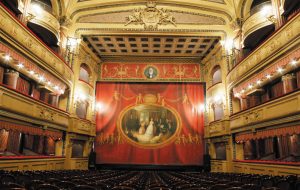
Palacio Valdés Theatre

  FROM OPEN WORLD

> Vocabulary exercises ‘Books and Reading’ (SEEN in class this week):
exercises 2 p.70 and 3 p.71 are essential to learn some B2 expressions we can use for book reviews. They practise the language in the text on p.71, most of whose language can also be used to talk about a film.
Note the points remarked in ex.5, at the bottom of p.71, which are some of the essential ones when speaking/writing about a book or film: author (for a film: director, screenwriter, adaptation), setting (when and where the story is set), characters, plot and  recommendation. The Book review Open Heart-A must-read, together with exercises 3 and 4, can help you familiarize with the language and structure used in reviews.

> Grammar:  Past Simple vs Past Perfect Simple and Continuous, p.72. If you have already watched the video on page 72 and seen Grammar Reference 5 on p. 214, do exercises 1 to 4 on page 72 and check your answers.  Ex.5 poses the question whether you have ever seen a film or play based on a book you have read. What are the differences between both? Which one do you prefer? -think about it! No need to do ex.6 on the same page.

> Vocabulary: Adjectives page 74. (SEEN in class this week):
Revise the positive/negative adjectives in exercises 1 and 2. Then think about other possible adjectives to add, for example: positivewonderful, great, spectacular, marvellousnegativemonotonous, disappointing, heavy-going. You can also attempt to do exercises 1 and 2 from the Push yourself to C1 section.

  LISTENING PRACTICE
During the week 19-22 April, I will collect a listening exercise in class. It will be part of your listening mark for the present term and final marks. Here are some exercises to practise the skill.

–  Death Valley.  Multiple-choice exercise about a man who is a guide on bus tours to Death Valley:
Death Valley          key+script         audio

–  Horror movies. 
Listen several times and complete the chart with the information given:          Horror movies         audio                       

–  A folk singer.  Listen to a conversation about a folk singer and decide if the statements are True or False.
A folk singer         key        script        audio 

  READING PRACTICE
The hidden dangers of rock music   True/false and vocabulary activity.

  SPEAKING to do in class during the week 19-22 April
As I told you in class, on those dates we’ll be doing an individual Speaking test which will be taken into account for the 2nd term and final marks. Remember it should be around 4 minutes long and you can choose the topic among the following:
My favourite book/ writer/ film/ series/ stage play/ actor – actress/ song/ singer/ band/ classical music work/ composer/ ballet/ dancer/ dance style/ music genre/ literary genre/ painting/ painter/ museum/ art period, etc.

On the next post you will find some additional examples and exercises on how to speak and write about a favourite art form. I hope they are helpful.

Hopefully you will be able to make some time for English!
Try to make the most of the few weeks left before the end of year!