End-of-year goodbye!

Hi everybody!

This is the last post of the year!

Thank you so much for attending the lessons, for your interest and participation throughout the eight-month-long school year and for contributing to the nice atmosphere in the classroom. It’s been a pleasure to have you all in class!

Remember that from Monday 30th May onwards, your marks will be available in the section Notificaciones at  eoioviedo.org, if you wish to check that everything is in order.

I wish you all an enjoyable summertime!
Rest as much as you can, but try to save a little time for English as well!

Best of luck!
Ana Carmen

LAST (at last!) HOME ASSIGNMENTS ;-)

Hi there!
Almost nothing left to end the school year!!
If you have not picked up your final marks yet, please come to class on Tuesday 24 to do so.

And if you have any queries or need to tell me anything, do not hesitate to send me an email or use the Teams chat. Both will continue to be operative until the end of June.
…………………………………………………………………………………..

♠  Here you can check whether your answers to the READING exercise you were given in class last Thursday are correct:
Dream Jobs + key

♠  And this is an extra LISTENING you can do when you have time:
Buy Nothing Day+key & script        mp3

♠  If you are interested in the history of English and were not in class on Tuesday 17th, here is the video we watched. It explains most of the important facts that gave birth to the English language we speak now.
There is also a gap-filling listening exercise you can do, which contains most of the facts in the video:
The history of English: exercise
video
answer key   


                                                 Anglo-Saxon script

Stonehenge, one of the oldest sites in history

                                             ‘Shakespeare and Company’ bookshop in Paris

Vocabulary: CRIME topic vocabulary+exercises & some other Certificación topics

Below is the link to ‘Crime and Punishment’ (one of the vocabulary banks you will find in the section of our B22 blog  CERTIFICACIÓN: Topic vocabulary banks & exercises – Ana Carmen’s Blog for B22 students (educastur.es)

These vocabulary banks deal with some of the most important topics included in B22 syllabus. Check them out whenever you have time. I hope they can provide you with useful ideas you can use in speaking/writing and certificación exams.

The topic CRIME and PUNISHMENT is not in your textbook, so it is worth having a look at the vocabulary and exercises you will find here:
Vocabulary and exercises

Exercises

In the section of the blog mentioned above, you will also find other interesting vocabulary banks and exercises. They can help you revise and boost your knowledge on topics such as ENGLISH TODAY, SOCIAL ISSUES or ADVERTISING, all of which may appear in Certificación exams.

Have a look at them if possible and check out the tags in the upper menu of the blog for other resources suited for B2 level and helpful if you are willing to take Certificación exams.
edublog.educastur.es/anacarmen2021

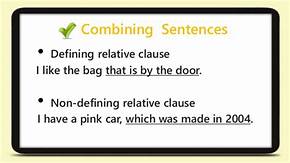
RELATIVE pronouns and RELATIVE clauses (defining & non-defining)

For those of you who wish to revise relatives -especially if you are going to sit Certificación exam next June-, these resources here combine exercises from your textbook Open World (unit 6) with some other activities.

  Grammar presentation:  Relative clauses
Watch the power point slides several times to revise relative structures and possibly learn new things about them.

  Open World. Grammar reference Unit 6, p. 217.
Read the brief explanation that reminds you of the difference between a defining and a non-defining relative clause, and then watch the Grammar on the Move video on p.87 -or the other way round, as you prefer-, before doing the two exercises on p.217. Note that in ex.2 n°4, the pronouns who/that can be omitted, as they are the object of the clause (this option is not in the key).

You can see the Grammar on the Move video through this link: http://www.cambridge.org/OW_First_Vid18

Go back to Relative clauses p.87 and do the exercises there, 1 to 5. Notice the use of whom, which you might not have come across with till now. In ex.4, sentence 5, both who and whom can be used with exactly the same meaning, being whom the most formal option. In exercise 5 you will practise some expressions with which and whom; in these phrases only whom is correct, but not who.

  Check out these links if you need to learn more about whom:
who vs whom: grammar rules       whom: exercise 1       whom: exercise 2

  Here is a useful video about relatives, which I guess will help you:
Relatives: grammar lesson

 These are some extra exercises to practise relatives more in depth:
Relative clauses: rules+online exercises with answers

Stonehenge: relatives who/which -online exercise with answers

Relative pronoun: necessary or not? -online exercise with answers

Relative clauses: online test with answers

Relatives: exercises+key (pdf)

Practice on relatives+key (pdf)